The Myth of the Finished Craft: Why Useful Making Can Stay in Progress
Useful making can stay in progress: see how trial pieces, mending, and adaptation help you make practical choices without rushing a project to completion.
The common mistake in useful making is treating a polished, finished object as the only valid result. That expectation can turn a torn pocket, a scrap of fabric, or a half-shaped piece of wood into evidence of failure, when each may be the start of a useful investigation. A sample that answers a question, a repair that keeps an object in use, and an adjustment that fits changing needs all count.
A craft practice built around progress rather than a grand reveal needs a rhythm for noticing, trying, and returning. Think of a trial piece as a spare key: it may not be the thing you came to make, but it can help open the next door.
Name the need before choosing an object
Choose one small, real irritation to work with: a loose button, a drafty gap around a fabric cover, a handle that feels awkward, or a container that no longer suits what it holds. Write down what the object needs to do, in plain terms. “Keep the notebook closed in my bag” is more useful than “make a beautiful notebook wrap,” because it leaves room for several solutions.
Look closely before reaching for materials. Check where the wear appears, how the object is used, and what could change without making it harder to use. A quick sketch or note on scrap paper can capture the problem; it need not predict the final form. If you are working with a borrowed, shared, or sentimental item, make sure a change is welcome before altering it.
Set aside a few scraps and a simple record: a notebook, a pencil, and perhaps a phone photo. Note the question you want to answer, such as whether a patch will flex at an elbow or whether a loop will sit comfortably on a hand. The point is not to create paperwork. It is to give each session a reason to end, even if the object itself remains unfinished.
Use small trials to answer one question at a time
Make a sample that answers one question at a time. For a fabric repair, compare a small running stitch with a patch held in place by clips before sewing. For a clay handle, press a rough strip onto a spare piece and notice whether its shape feels secure in your fingers. For a paper object, fold a test strip before cutting the sheet you want to keep. A trial can be lopsided and temporary; its job is to make an uncertainty visible.
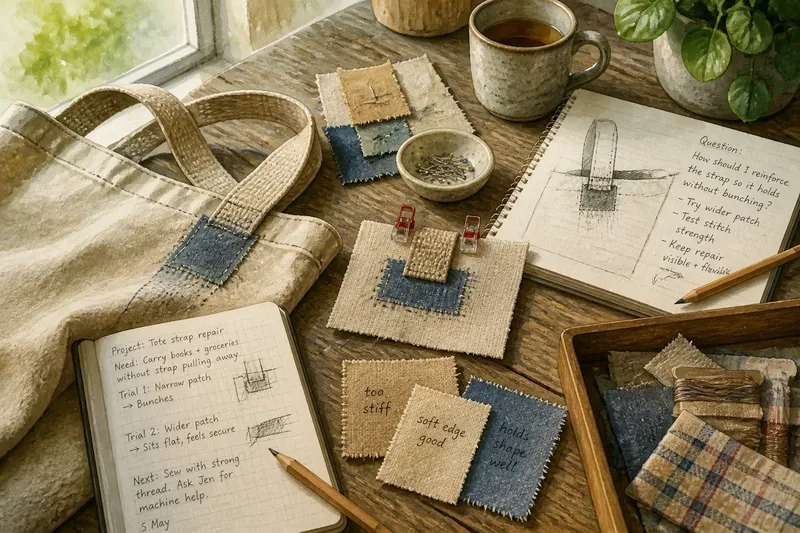
Imagine you want to mend a canvas tote whose strap has begun to pull away. You examine the seam and cut a small piece of scrap canvas to see how it sits beneath the strap. The sample suggests that a narrow patch would bunch, so you widen it and pin the changed shape in place. At your next session, you can choose whether to sew the repair, ask someone with sewing experience to help, or keep the tote aside until you have the right support. The trial has already produced a useful decision, even before the bag is repaired.
Keep trials distinct from the object you hope to preserve. Label scraps with a few words—“soft edge,” “too stiff,” “holds shape”—or store them beside a sketch. If an attempt does not suit the need, record what it taught you and move on. A failed fit can save good material from an unsuitable alteration.
Choose whether to repair, adapt, or pause
Let the sample guide your next action. You might mend the original, alter it so it works differently, or decide that no change is preferable. Useful making is not a contest to intervene. Sometimes the most thoughtful result is a clear reason to wait, especially when the object still works or a repair would make it less comfortable.
When you proceed, make the change in a way that leaves room for future use. A removable tie, a visible patch, or a replaceable paper insert can be easier to adjust than a permanent alteration. Consider how the object will be cleaned, stored, carried, or handled. A repair that suits the object’s ordinary life is often more useful than one that hides every trace of wear.
Adaptation can also mean changing the intended use. A shirt with an irreparable cuff might become a cloth for wrapping tools; a shallow box may become a tray for sorting buttons. This is not a consolation prize for a failed project. It is a response to what the material can still do. Keep the original purpose in view, but do not let it rule out a better one.
Keep a record that makes returning easier
Whenever you pause, look at the object, the samples, and your notes together. Record what changed, what remains uncertain, and what you would try next. If the work is usable, note how it feels in use. If it is still in progress, name the next decision rather than writing “unfinished.” “Try a softer lining” gives you somewhere to begin; “not done” does not.
You can also decide to set the project aside. Put the object and its materials somewhere you can find them, and leave a note with the next small action. A paused project does not need to occupy your mind every day. It can wait until a new need, a fresh idea, or a better material makes returning worthwhile.
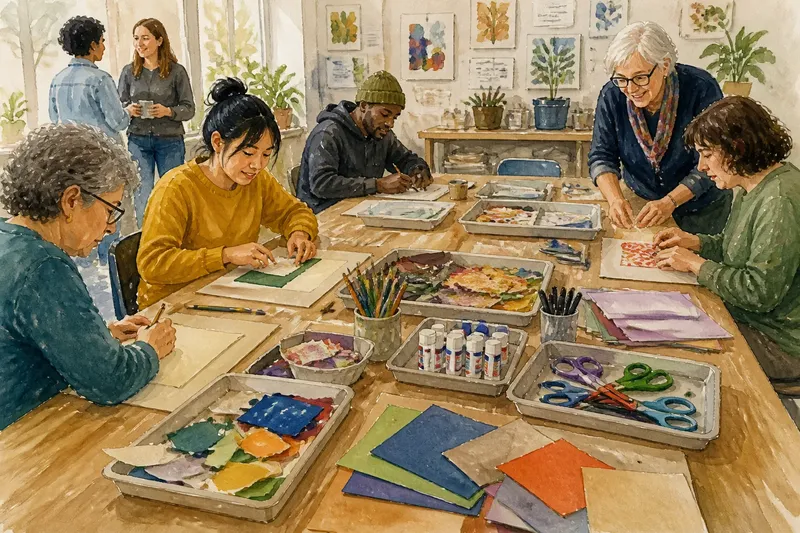
Sharing an in-progress piece can make its value easier to see. At a local makers’ gathering, repair café, library craft table, or informal exchange with a friend, show the question you explored as well as the object. A sample that did not work may prompt a useful suggestion; a visible repair may invite someone else to consider mending their own things. You do not need to present the work as a finished success story. A clear account of what you tried is enough.
Questions about useful making in progress?
Does a trial piece count as making?
Yes, if it helps you understand a material, test a fit, or choose what to do next. The sample has a purpose even if it never becomes part of the object.
How do I decide whether to mend or replace something?
Consider whether the object still suits its use, whether a repair seems manageable, and whether the change would preserve comfort and function. If the repair involves a specialized skill or a valuable item, a qualified repairer can help you weigh the options.
What if I keep changing the design?
Return to the need you wrote down and check whether each change serves it. If the object has become a different project, note that shift and decide whether you want to follow it or set it aside.
How can I share work that is not polished?
Show the object alongside a sample, sketch, or short note about the question behind it. That gives others something concrete to respond to without asking you to pretend the work is complete.
Let the next use define completion
For useful making, completion can be a repair that holds, a changed use that makes sense, a decision not to alter something, or a sample that clears the way for a later session. The point is not to lower the standard for finished work; it is to stop confusing finish with value. Keep the next action small enough to return to, and let the object tell you when it is ready for another change—or ready to be left alone.