Gallery Map or Room List? Choosing a Way to Explore an Exhibition
Choose a gallery map or room list to match your attention and interests, find the work you came for, and leave space for an unplanned detour.
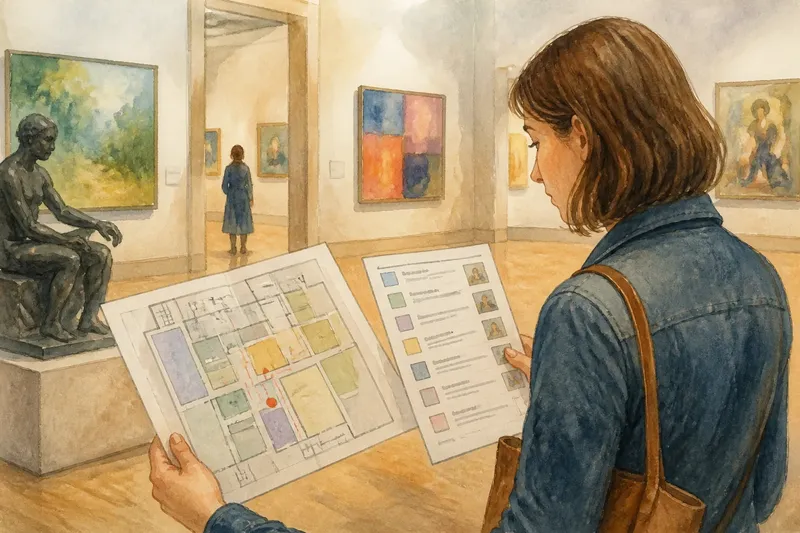
The most common mistake with a gallery map is treating its suggested route as a test to complete; the cost is less time with the work that catches your eye. A room list can create a different kind of pressure, making each section feel like an obligation. Choose between them by asking what would help you pay attention: a sense of place, a quick way to find a subject, or both.
A map shows how rooms connect and where paths lead. A room list names sections, often with brief descriptions. Either can help you orient yourself, locate particular work, or leave room for discovery.
A gallery map helps you understand how rooms connect
A map is useful when the building is hard to hold in your head. Galleries may sit on several floors, branch off a central hall, or share space with a shop, courtyard, or event room. A visual plan can show where stairs lead and whether two sections connect, details a list may leave implicit.
The trouble begins when a printed line, number sequence, or arrow looks mandatory. A route is usually a suggestion, not a rule about how to appreciate an exhibition. Following it room by room may help with orientation, but it can also pull you away from an artist or subject that caught your attention.
Read the map as a set of options. Find your current room, locate the area you most want to see, and notice one or two ways to get there. Then choose locally: continue, turn aside, or pause. A map is like a street plan: it shows where paths meet, not what deserves your time.
A room list helps you choose what to see
A room-by-room list is often easier to scan for a named artist, medium, or theme. A short description can tell you that a section holds photographs, sound work, or a particular subject, helping you decide what to prioritize before you start walking.
But a list may not reveal how far apart rooms are, whether a section sits upstairs, or whether the sequence doubles back. It can also make an exhibition seem more linear than it is. Numbering may reflect the gallery layout, not a story visitors must follow.
Use the list to choose destinations, then check the building layout if the venue provides one. If you cannot find a map, ask the front desk how the named rooms connect. An inventory and a floor plan answer different questions.
When should you choose a map, a room list, or both?
Which guide helps if you have little attention to spare?
A room list can help you pick a few sections that match your interests, while a map can make the journey between them easier to follow. If reading feels like work, scan the room names and consult the map only when you need to orient yourself.
Which guide is better if you came to see one artist or subject?
Start with the room list, since names and themes are easier to find in a short index than across a floor plan. Once you know the destination, use the map to locate it and decide whether nearby rooms are worth adding.
Which guide supports an unplanned visit?
A map can invite a turn toward a room you had not planned to enter, especially when it is nearby. A list can prompt discovery through an intriguing description, though you may need to read more before spotting the next possibility.
Should you follow the printed order?
Follow it if the sequence helps you understand the exhibition or makes movement simple. If a work draws you elsewhere, the order can wait; return to it only if you still want to.
When your guide creates friction, make one clear adjustment
- Check whether the map has a “you are here” mark; if it does, match that point to your room, and if it does not, orient yourself using a landmark such as the main entrance.
- Check the map’s floor label; if it matches your current level, trace one connection at a time, and if it does not, find the stair or lift before choosing a route.
- Check whether a room description names the artist or subject you want; if it does, head to that section, and if it does not, scan the other headings or ask staff where to look.
- Check whether the guide’s sequence appears to skip a room; if current signs confirm the room is open, follow the signs, and if they conflict with the guide, ask a gallery attendant about closures or a changed route.
- Check whether an artwork label matches the guide’s reference; if it does, read the text beside that work, and if it does not, look for a printed number or ask staff rather than guessing.
- Check whether you are spending more attention decoding than looking; if you are, put the guide away for one room, and if you need the next destination afterward, consult it again.
- Check whether the guide marks stairs, lifts, closed areas, or accessible routes; if the information is clear, use it to choose your path, and if anything is uncertain, ask venue staff for current guidance.
Use a map and list together when they answer different questions
A route-led map suits a visitor who wants to understand the building, move among several areas, or leave room for detours. A room list suits someone arriving with a subject in mind, wanting brief context, or preferring to choose destinations before walking. If both are available, use the list to choose and the map to connect.
Say you arrive with a particular interest in textiles and want to leave time for wandering. The list names a textile section, so you mark it as your first stop. The map shows a sculpture room nearby; you go to the textile section, then check whether you have the time and interest to visit the neighboring gallery. The result is a clear destination and a genuine choice about what comes next.
For a gallery map or room list, the best choice depends on what you want from this visit. Keep the guide available as a tool, but let the work—not the printed sequence—decide when a detour is worth taking.