Before the Community Arts Centre: The Many Uses of the Village Hall
See how a village hall could host local culture through adaptable rooms, recurring gatherings, and organizers who turned ordinary bookings into shared events.
The common mistake is to treat the village hall as a plain room that occasionally hosted something artistic. That assumption makes the village hall’s cultural role harder to see: a shared room could become a meeting place, dance floor, rehearsal space, exhibition room, or children’s performance venue as local groups arranged it. The pattern varied from place to place; there was no single timeline in which every hall gave way to a community arts center.
Rather than claim a universal history, it is more useful to look at how a particular hall was used: its bookings, notices, furniture, and organizers. Chairs moved; tables appeared; a curtain opened or stayed shut. The same floor might host a committee discussion one evening and a play rehearsal another. The room’s cultural character often emerged through these changing uses.
A village hall brought cultural activity into everyday local life
A village hall was generally a multipurpose building intended to serve local needs. Its room might accommodate public meetings, clubs, celebrations, classes, social gatherings, and performances. Not every hall offered the same facilities or hosted every kind of event. The defining feature was flexibility: a space could be booked or organized for different purposes rather than reserved for one cultural activity.
That arrangement shaped when people might encounter culture. Someone attending a parish meeting could hear about a local play; a family at a seasonal gathering might see handmade objects on display; a dance group might rehearse where neighbors later watched a concert. Culture could be part of an ordinary local visit rather than a separate destination.
A dedicated arts venue often makes its artistic purpose visible from the entrance. A multipurpose hall may signal an event through a handwritten notice, stacked chairs, or rehearsal sounds behind a door. Its cultural life depends less on a single architectural feature than on repeated acts of organizing: inviting people, arranging the room, and creating a reason to gather.
Furniture arrangements shaped how people took part
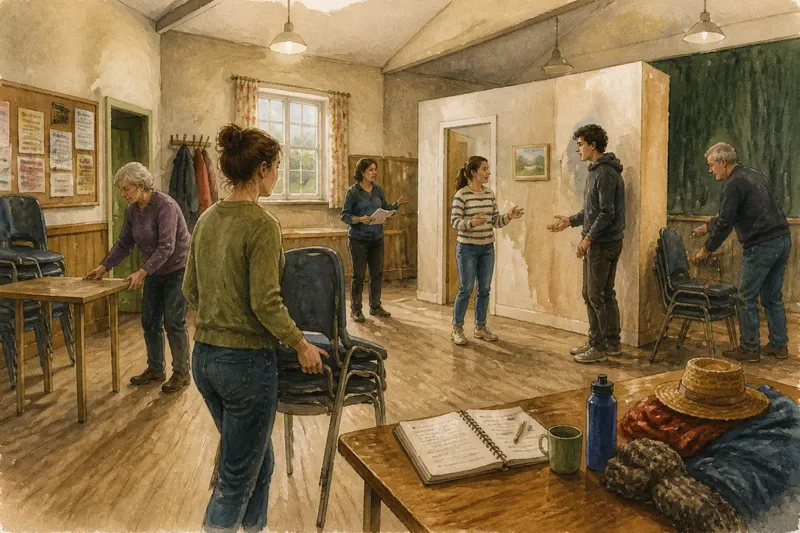
In a hall without elaborate fittings, furniture could do much of the work. Rows of chairs faced a speaker or a small platform. Clearing the center made room for dancing, while tables suited a class, display, or refreshment area.
These choices also shaped participation. Rows suggest watching or listening; a circle invites conversation; an open floor makes movement possible. A line of tables can encourage browsing or making. Like a kitchen table used for a meal, a desk, and a place to sort mail, the hall’s purpose could shift without the room itself changing.
Imagine a local drama group with permission to use a hall normally arranged for meetings. Its members move the tables to one side, set chairs facing a clear patch of floor, and place a portable screen to suggest a doorway. The expected result is a rehearsal area where entrances and sightlines are easier to discuss. The room remains a meeting hall, and the furniture can be returned afterward.
Adaptability has limits. A low platform is not a full theater stage, and a room that suits a talk may not suit every performance. Available space, storage, access, sound, and booking arrangements affect what can happen. The useful question is what activity the room can support with the space and people available, not whether it can imitate a specialist venue.
Recurring gatherings made the room familiar
A single event can bring people through the door, but a regular music group, seasonal show, dance, or class can give a hall a different role. Participants learn where coats go, how chairs are arranged, who opens the building, and how the gathering tends to unfold. The room becomes part of the practice, not just a place to book.
Familiarity may make a new activity feel less distant to someone who already knows the hall from a club or community gathering. It does not mean everyone feels included. Notices, local networks, timing, transport, cost, and the welcome at the door all affect who hears about an event and who feels able to attend.
Repetition can also help a group build skills, relationships, and shared expectations. A one-off performance depends on a burst of preparation; a continuing class or rehearsal creates a reason to return. The hall provides continuity, while the activity gives the room a particular use.
What else could a village hall host?
Could a village hall hold an exhibition?
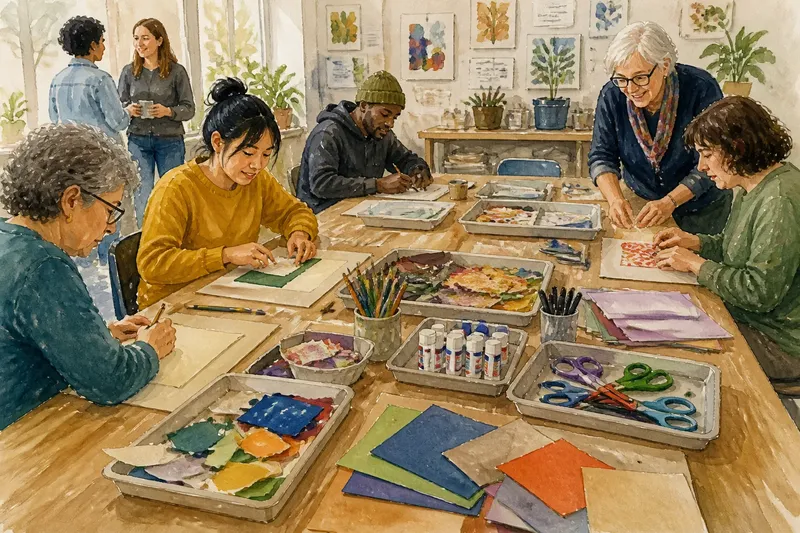
It could host a temporary display of photographs, paintings, textiles, or objects using walls, tables, or suitable boards. Organizers would need to fit the display around the hall’s other uses and leave clear routes for visitors.
Could people learn a creative skill there?
A hall could accommodate drawing, singing, dance, or another class if its space and available materials suited the activity. A recurring class could use a multipurpose room without requiring the building to become a specialist studio.
Could a public celebration include cultural activity?
A seasonal gathering could include music, storytelling, dancing, or a display alongside social activities. People might encounter creative work as part of a broader occasion rather than as a separate event.
Could residents organize an event themselves?
Local groups or individuals could propose an activity and coordinate with whoever managed bookings and access. The arrangements would depend on the particular hall, its organizers, and applicable local requirements.
Organizers connected the room to its changing uses
A flexible room does not organize itself. Someone has to agree on a date, share information, arrange access, and decide how the space should be left afterward. A committee, club, volunteer group, or informal network might take on these tasks. Much of this work happens out of sight, but it helps turn an empty room into a public occasion.
Organizing involves negotiation. A group may need to fit a rehearsal around another booking, store equipment without blocking shared areas, or adapt an event to the room’s acoustics. Such practical decisions shape the program: they can suit activities that work well in a flexible room and complicate others.
Access to the room does not automatically mean equal access to cultural participation. People need to hear about an activity, feel welcome, and be able to reach the venue and join in. A notice in a familiar place might reach regular users but miss newcomers. Personal invitations or other community channels may widen the invitation, though each has its own reach. How openly a hall is shared depends in part on information, scheduling, and welcome.
Village halls and arts centers did not follow one universal timeline
It is tempting to describe a simple progression: first the village hall, then the purpose-built community arts center. That neat sequence is not a safe account of every place. Multipurpose halls and dedicated arts spaces can coexist, and local cultural activity need not move from one to the other in order.
A specialist venue may offer equipment or facilities suited to particular work. A shared hall may remain useful because it is familiar, locally organized, and available for varied gatherings. The distinction is one of emphasis, not a contest: some activities can move between spaces, while others depend on the qualities of a particular room.
For a specific local history, look for evidence tied to that place and period: old booking records, programs, committee minutes, photographs, or oral histories. These sources can show which activities took place and who organized them. Without that evidence, it is better to describe the hall’s possible uses than to claim a fixed chronology for village halls generally.
When you pass a village hall, a varied noticeboard, equipment waiting by a side door, or chairs set for a gathering can hint at its current life. Those clues point to the people making a shared room useful now. The village hall’s cultural role lies not simply in containing art, but in giving different kinds of making, watching, learning, and meeting a place to take turns.